
Cobetter Irradiated ATF Hollow Fiber Products

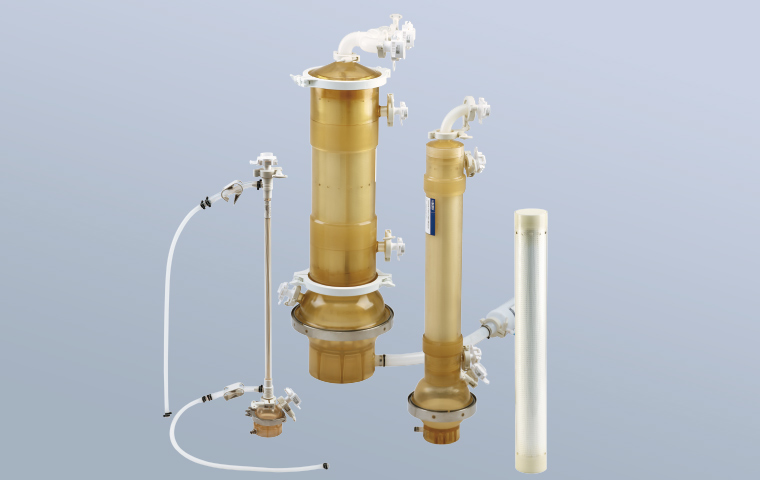
Cobetter Irradiated ATF Hollow Fiber Products Suspended cell culture technologies primarily encompass three mainstream modes: perfusion culture, fed-batch culture, and batch culture. Currently, the domestic biopharmaceutical industry employs fed-batch culture as the primary production method. However, perfusion processes are gaining increasing attention due to their distinct advantages. Compared to fed-batch systems, perfusion systems enable faster seed cell expansion and maintain long-term stability of high-density cell cultures during the N stage. By enabling real-time product harvest, perfusion processes significantly enhance production efficiency. Furthermore, this approach ensures consistent product quality while reducing capital investments in production facilities and ancillary equipment. The core of perfusion technology based on hollow fiber systems lies in establishing a closed cultivation system that integrates an ATF hollow fiber column, tangential flow control systems, and bioreactors. This system effectively retains cells within the cultivation vessel and employs intermittent or continuous medium exchange strategies to create an optimized microenvironment for cell growth.
Pultrix™ Fibers HCM depth absorption filters

From High-Density Cell Culture Broth to Post-Centrifugation Supernatant, the Two Products Provide a Comprehensive Clarification Solution Introduction In biopharmaceutical processing, the efficiency of harvest and clarification steps directly determines the yield and quality of the final products. Faced with increasing complex high-density cell culture systems, the industry urgently needs a more efficient, stable and scalable clarification solution. Therefore, Cobetter has launched Pultrix™ Fibers HCM depth absorption filters, specially designed for clarifying complex fermentation broths:· Pultrix™ Fibers HCMO: Suitable for single-step direct filtration of fermentation broth.· Pultrix™ Fibers HCMC: Specially optimized for filtration of post-centrifugationsupernatant. The two products establish a complete process pathway covering “direct filtration of cell culture broths to post-centrifugation clarification.”They offer biopharmaceutical enterprises an efficient, robust, and scalable single-step clarification experience – truly achieving a one-step leap from complex feedstreams to high-quality clarification. 1. The Two Products Provide a Perfect Combination to Meet Different Process Requirements 2. Technical Highlight: Functionalized PP Fibers Based on AEX Membrane Adsorption Technology Both products employ synthetic fiber anion-adsorptive grafting technology, using a combination of polypropylene (PP) fibers functionalized with quaternary ammonium (Q) groups of different pore sizes to directly adsorb and remove impurities such as cells, debris, and DNA, achieving precise separation based on electrostatic interactions. Soluble and insoluble impurities interact electrostatically with the positively charged ligands on the fiber matrix, enabling their removal and efficiently retaining various particles generated by cell lysis. Specifically, large-pore PP functionalized fibers can retain cells and debris while, through the anion-exchange mechanism, effectively capturing impurities smaller than 0.5 μm that are difficult to remove with traditional depth or membrane filtration technologies. Excellent Processing Performance: The product recovery rate >95%, stable turbidity control with lesser NTU, while efficiently removing both soluble and insoluble impurities. Wide Applicability: Whether for mAb production from CHO cell cultures or for the clarification of AAV lysates from HEK293 cells, both products deliver outstanding performance, providing robust support for the development of diverse biologics. Featuring alkali-resistant housing, they can be sterilized via cleaning prior to use.
Water for Injection (WFI) Preparation By Membrane May Become Possible
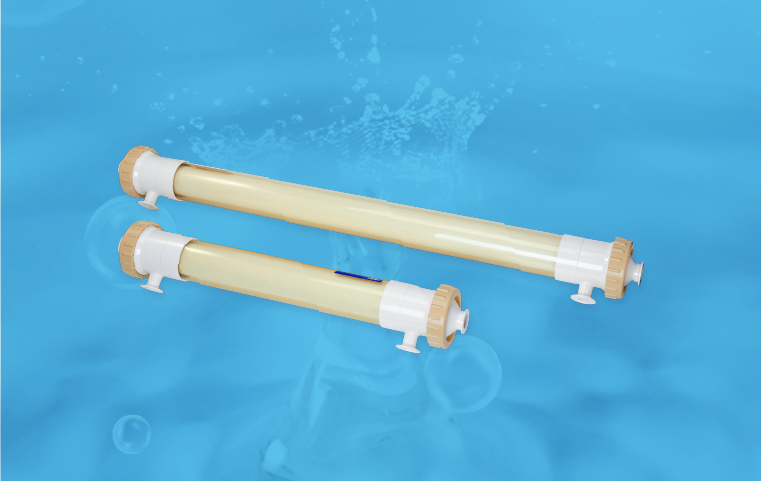
Water for Injection (WFI) Preparation By Membrane May Become Possible Recent regulatory developments, particularly within the European Pharmacopoeia (Ph. Eur.), are accelerating the acceptance of membrane-based technologies for producing Water for Injection (WFI). The Ph. Eur. now explicitly permits non-distillation methods — such as reverse osmosis (RO), electrodeionization (EDI), and ultrafiltration — provided they achieve performance equivalent to traditional distillation in removing chemical impurities, microorganisms, and endotoxins. Experimental data using a Cobetter 6 kD hollow-fiber membrane show promising results, achieving endotoxin levels <0.02 EU/mL under high-load challenge conditions. As additional regions, including China, consider aligning with European guidance, membrane-based WFI generation is emerging as a scientifically robust and regulatory-supported alternative for pharmaceutical manufacturing.